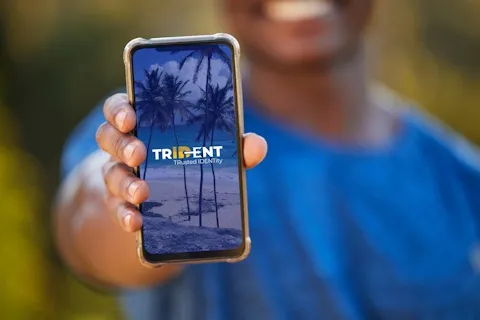
Your Identity, in Your Hands: Mobile Access and Digital Credentials with TRIDENT
TRIDENT brings secure authentication and trusted digital credentials to the smartphone, giving citizens new ways to access services and prove what they need.
Your phone already holds things you trust it with. Your identity can be one of them.
TRIDENT will bring two mobile capabilities, and the difference between them matters. The Mobile Authenticator, also referred to as Mobile ID, is how you prove it's you and approve what you're doing. The Mobile ID Wallet is where you hold credentials and choose what to show.
One is about access. The other is about proof. Both connect to the same national identity.
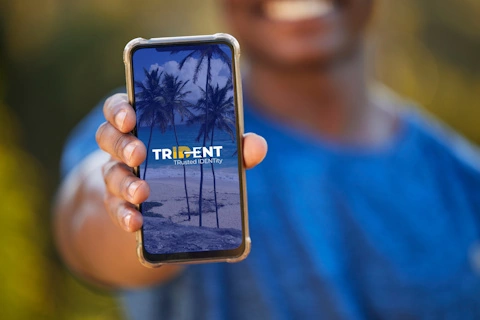
One identity, fewer passwords
Every service having its own login is how people end up with a dozen passwords and reuse the same one everywhere.
The Mobile Authenticator will let citizens use their national identity to sign in to participating services instead. One trusted identity, recognised across services that connect to it.
You see what you're approving
When something needs stronger confirmation, the request appears on your phone with the details: which service is asking, and what action it wants to complete. You approve it or you reject it.
That's a small design decision with a real consequence. An approval prompt that just says "confirm?" teaches people to tap yes. One that names the service and the action lets them notice when something is wrong.
Credentials you hold, not copies you send
The Mobile ID Wallet will let citizens receive, hold and present digital credentials issued by authorised institutions.
The foundational one comes from the national identity ecosystem. Over time, other authorised institutions will be able to issue credentials from the records they're the authority on, each still resting on the same trusted foundation. Possibilities include:
- Proof of age or senior status
- Proof of address
- A digital birth certificate
- A mobile driving licence
- Health credentials
- Educational qualifications and CARICOM Skills Certificates
Which credentials become available, and when, depends on the institutions responsible for them and the policies they set.
Showing only what's asked for
A paper document shows everything on it, whether or not it's relevant.
Consider proving you're over 18. Handing over an ID card reveals your date of birth, your full name, your address and your ID number, when the only thing being asked is whether you've reached a certain age.
A digital credential can answer just that question. And before anything is presented, you'll see what's being requested and decide whether to confirm it. Credentials will work online and, where enabled, in person through compatible reader applications.
One channel among several, not a replacement
Not everyone wants to do this from a phone, and nothing here requires it. The TRIDENT ID Card, online access and assisted services continue alongside mobile.
Institutions and organisations, for their part, will be able to connect to these mobile capabilities rather than build their own, while keeping their own processes and decisions.
Wondering how your identity is protected on a phone?
The article Protecting the Foundations of Digital Trust explains the national trust infrastructure behind every TRIDENT interaction.