
One Trusted Identity. More Ways to Connect.
Every service having its own way of knowing who you are is a cost you pay repeatedly. One identity that works across services changes that arithmetic.
Count the ways you currently prove who you are. A card at one counter. A password somewhere else. Answers to questions about yourself on the phone. The same documents, uploaded again.
Each of those was reasonable on its own. What they add up to is not. The effort of being identified falls on you, over and over, and none of it carries from one place to the next.
A national identity that works across services changes that arithmetic.
The cost of starting over each time
When every service maintains its own way of establishing who you are, the work is duplicated by design. Each one asks for the same information, checks it independently, and stores its own copy.
For you, that means another password, another set of documents, another process. For the institutions, it means each one building and maintaining something the others have already built. Nobody chose that outcome. It's what happens when identity is solved service by service.
One identity, many doors
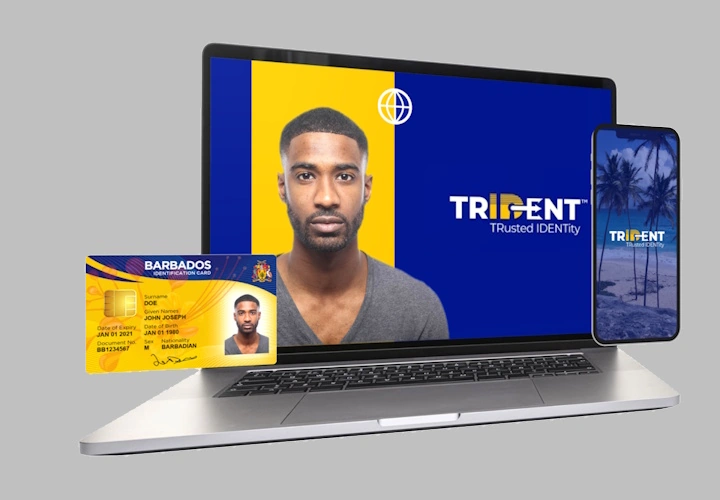
The alternative is a single trusted identity that participating services recognise, used through whichever channel suits the moment: in person with your card, online, or from your phone.
They aren't competing options and you don't have to choose one. They're doors into the same identity, and the one you use for a given task can be the one that's most convenient at the time.
What you stop doing
Fewer separate accounts and passwords to keep track of. Less re-entering details a service could confirm instead. Fewer copies of the same documents. Fewer trips made only to be identified.
None of it disappears overnight. It changes as each service connects, which is why the benefit accumulates rather than arriving all at once.
One identity is also easier to keep an eye on
This is the part that's easy to miss. When your identity is scattered across a dozen unrelated accounts, you have no way of seeing how it's being used. Each one is its own island.
One identity gives you a single vantage point. You can be asked before identity details are shared, see which service is asking and what for, and confirm or decline. Where an action matters, you approve that specific action rather than granting something open-ended.
Fragmentation was never privacy. It was just distance.
Nothing is taken away
Using your identity digitally is an option, not an obligation. The TRIDENT ID Card continues to work as it does today, and services that people prefer to handle in person continue to be available in person.
More ways to use one identity means exactly that: additional options, not replacements.
What can this identity actually do?
The article Expanding the TRIDENT ID Experience sets out the ways it can be used.