
More Ways to Use Your TRIDENT ID Card
Today the card is something people look at. Modernisation will make it something systems can verify, with your consent, turning a trusted document into a working part of digital services.
Right now, using your TRIDENT ID Card means handing it over. Someone looks at it, reads your details, and types them into a system.
The card already contains a secure chip. What modernisation adds is the ability for authorised services to read it, so the card stops being a document to be examined and becomes one that can be checked electronically.
Same card, same wallet. More it can do.
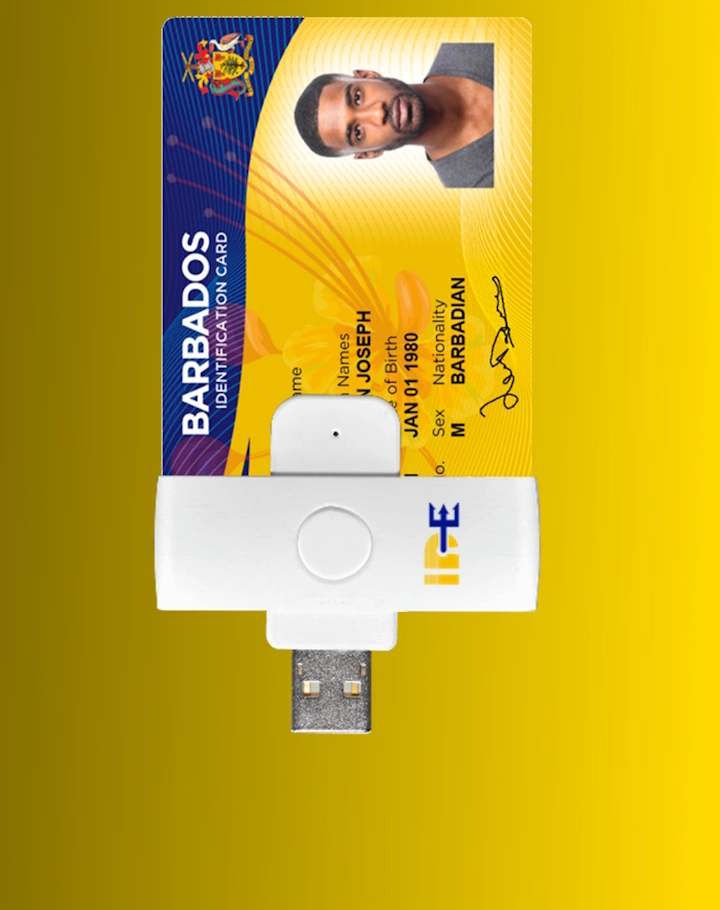
From looked at, to verified
A person reading a card can tell you what it says. They can't easily confirm it's genuine.
When an authorised service reads the chip instead, it receives details that came from the card itself, confirmed as authentic. No transcription, no typing errors, no judgement call about whether a document looks right.
What the chip holds, and what it doesn't
The chip on your TRIDENT ID Card holds identity information, along with the security features that let an authorised service confirm the card is genuine.
It is not a payment card. It holds no bank account details, no card numbers and no financial information, and it is not connected to any account you hold with a bank or any other organisation.
Your card, plus a code only you know
The card's electronic functions will be protected by a personal code, or PIN, used only with your TRIDENT ID Card and only to authorise its identity functions.
It is separate from every other code you use. As with any code, choose one you don't use elsewhere and keep it to yourself.
The combination is what protects you: the card alone isn't enough, and the code alone isn't enough. If the card is lost or stolen, its protected functions can't be used by whoever finds it.
What changes at the counter
Consider registering for something in person today. You present your card, an officer reads it aloud or squints at it, types your name, your ID number and your date of birth, and asks you to confirm each one.
With chip reading, you present the card, authorise the check, and the details arrive complete and correct. The conversation moves on to what you actually came for.
The card will also be usable as part of stronger sign-in journeys, where having the physical card in hand becomes one of the ways of confirming it's really you.
One way for services to connect
Institutions and organisations won't each build their own connection to the card and its readers. A common integration layer handles that, so a service desk, a registration process or an identity check can use the card without any of them solving the same technical problem separately.
The card also works beyond Barbados
The article Travelling Between Barbados and Guyana with Your TRIDENT ID Card explains how the card is accepted as a travel document.